
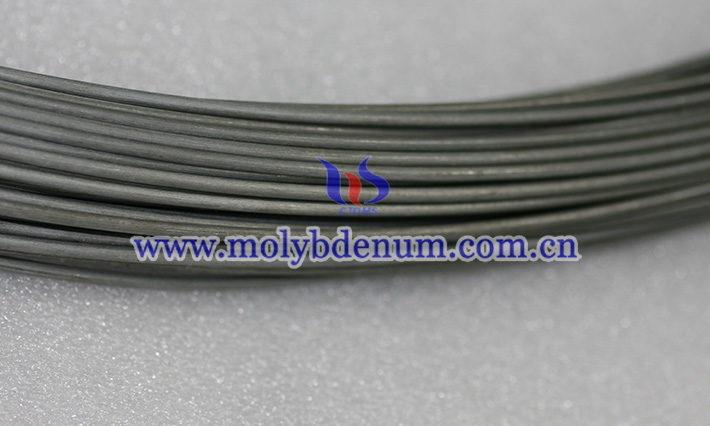
Molybdenum wire not only possesses excellent high-temperature resistance but also exhibits remarkable corrosion resistance, making it widely applicable in extreme environments. Compared to many conventional metals, molybdenum demonstrates superior resistance to acidic, alkaline, and saline conditions, allowing it to play a crucial role in industries such as chemical engineering, metallurgy, nuclear energy, and marine engineering.
1. Corrosion Resistance Mechanism
The corrosion resistance of moly wire comes from its ability to rapidly form a dense oxide layer on its surface.
This oxide layer acts as a protective barrier, preventing direct contact between the metal and external corrosive media.
Even in strong acids and strong alkalis, molybdenum remains stable, preventing further material degradation.
This property makes moly wire an ideal material for chemical reactors, acid-resistant processing equipment, and other corrosion-prone environments.
2. Applications in Chemical Engineering
In the chemical industry, moly wire is widely used as heating elements and sensors in reactors and acid-handling systems.
Many chemical processes occur in highly corrosive environments where traditional metal components may deteriorate quickly.
Moly wire provides long-term durability in these conditions, ensuring stable operation of chemical reactors.
It can withstand high temperatures and aggressive chemical exposure, preventing equipment failures caused by material degradation.
3. Applications in Metallurgy
The metallurgical industry also benefits from the corrosion-resistant properties of molybdenum wire.
It is commonly used as a heating element in high-temperature furnaces where both oxidation and corrosive gases are present.
The extreme furnace conditions—high temperatures combined with aggressive chemical vapors—require materials that can resist degradation.
Moly wire ensures long-lasting performance in these conditions, improving both efficiency and safety in metal refining and alloy production.
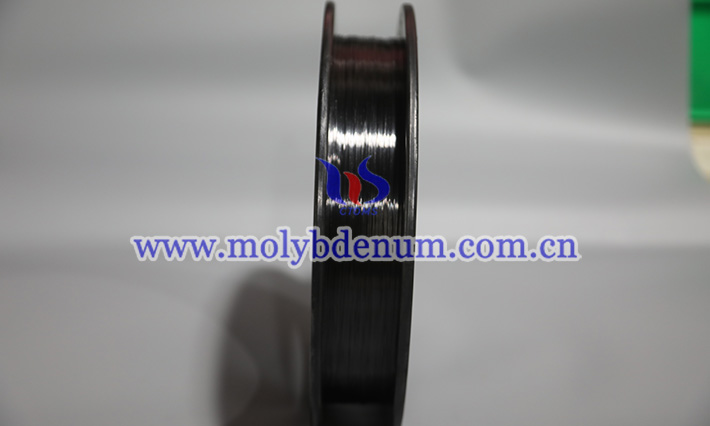
4. Applications in Nuclear Energy
Molybdenum wire is an important material in the nuclear energy sector, where it must withstand high temperatures, radiation exposure, and corrosive conditions inside nuclear reactors.
It is used in key components that must endure neutron radiation, intense heat, and chemically aggressive environments.
Molybdenum's stability under extreme conditions makes it a preferred material for nuclear fuel cladding, reactor core components, and radiation shielding materials.
Its resistance to radiation-induced degradation ensures long-term operational safety of nuclear facilities.
5. Applications in Marine Engineering
Moly wire’s exceptional resistance to seawater corrosion makes it ideal for marine engineering usages.
Seawater contains high concentrations of salt and corrosive substances, which can rapidly degrade conventional metal components.
Moly wire is widely used in marine equipment, such as underwater exploration instruments, oceanic sensor electrodes, and offshore platform heating elements.
It ensures long-term durability and stability in harsh marine environments, reducing maintenance costs and equipment failures.