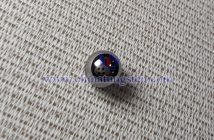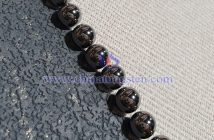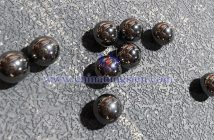
Tungsten balls in the pen industry are the core component of modern ballpoint and gel pen tips. Their diameter is typically between 0.3 and 1.0 mm, yet they play a crucial role in determining writing smoothness, durability, and ink uniformity.
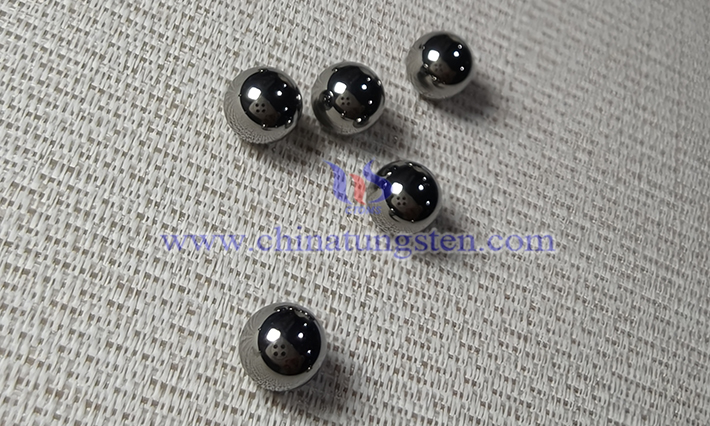
The main material of tungsten balls in the pen industry is hard alloy composed of tungsten carbide (WC) and cobalt (Co) as binders. With its extremely high hardness, wear resistance, and chemical stability, it has become the mainstream choice to replace early stainless steel balls. A typical tungsten carbide ball has a WC ratio of approximately 94% and a Co ratio of approximately 6%. Its Vickers hardness typically exceeds 1400 HV, far higher than ordinary metal materials. This makes the tungsten ball less prone to deformation or wear when repeatedly rubbed against paper and subjected to writing pressure.
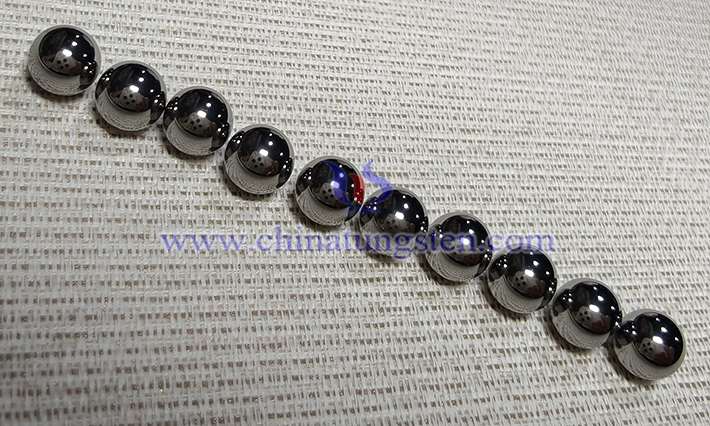
The production process of tungsten balls in the pen industry: (1) Raw material preparation: High-purity tungsten carbide powder and cobalt powder are mixed in proportion, and a forming agent is added. (2) Ball Forming: The mixed powder is pressed into a spherical blank slightly larger than the finished product through cold heading or molding. (3) Sintering: Sintering is carried out at a high temperature of 1300-1500℃ under vacuum or a protective atmosphere, so that the cobalt phase melts and coats the tungsten carbide particles to form a dense structure. This stage determines the hardness, toughness, and microstructure. (4) Finishing: The ball blank undergoes multiple processes such as rough grinding, fine grinding, and polishing to finally achieve a mirror finish and the required diameter tolerance. (5) Surface Treatment: Some high-end tungsten beads also undergo special corrosion or coating treatment to optimize wettability and corrosion resistance with ink.
The surface of the tungsten bead is not completely smooth, but retains many uniformly distributed micropores with diameters ranging from a few micrometers to submicrometers. These pores act like ink reservoirs, temporarily storing a small amount of ink during writing and then releasing it evenly, thus achieving stable ink flow, preventing line breakage, and preventing ink accumulation. If the pore distribution is uneven or too large, problems such as ink bleed, poor ink flow, or rapid wear of the pen holder may occur.