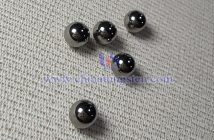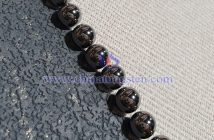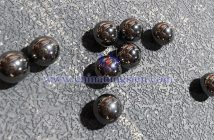
In the field of flow meters, tungsten balls, with their high hardness, high melting point, and high strength, have become key functional components, playing an irreplaceable role, especially in terms of regulation accuracy, wear and corrosion resistance, and stable operation.
I. Working Principle of Tungsten Balls in Flow Meters
Tungsten balls primarily perform dynamic regulation functions in flow meters. Taking differential pressure flow meters as an example, their core principle is to calculate flow rate by generating a pressure difference through a throttling device. Tungsten balls are often designed as movable throttling elements. When fluid flows through the pipeline, the tungsten ball automatically adjusts its position under the action of fluid dynamics, changing the effective area of the throttling orifice, thereby achieving precise flow control. This design is like a smart valve, avoiding measurement errors caused by flow rate changes in traditional fixed throttling devices, and ensuring the stability of the regulation process through the high density characteristics of tungsten balls, preventing positional shift even under high pressure differential conditions.
II. Advantages of Tungsten Beads in Flow Meters
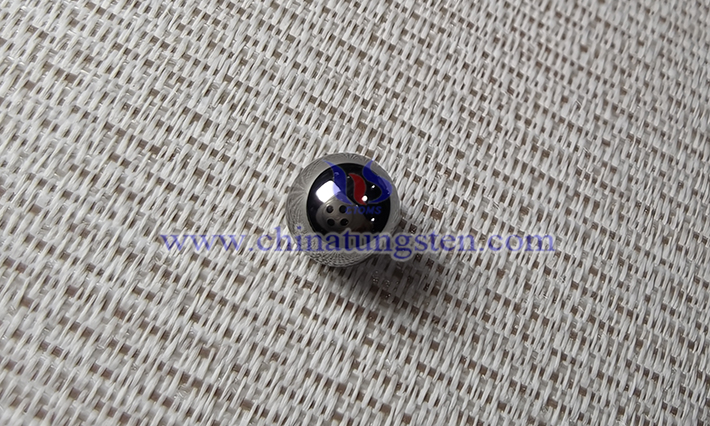
Flow meters often face the impact of corrosive media or fluids containing particles. Ordinary metal components are prone to wear, leading to a decrease in accuracy. The tungsten carbide matrix of tungsten beads possesses extremely strong chemical stability, being insoluble in water, hydrochloric acid, and sulfuric acid, and only slowly dissolving in a mixture of nitric acid and hydrofluoric acid. This characteristic makes them outstanding in measuring corrosive fluids in industries such as chemical and petroleum. For example, in electromagnetic flow meters, tungsten bead electrodes can be in contact with media containing chloride ions or sulfides for extended periods without electrochemical corrosion, significantly extending the instrument's lifespan. Simultaneously, the high hardness of tungsten beads allows them to resist the erosion of solid particles such as sand, maintaining the smoothness of the measuring channel and ensuring the accuracy of signal transmission.
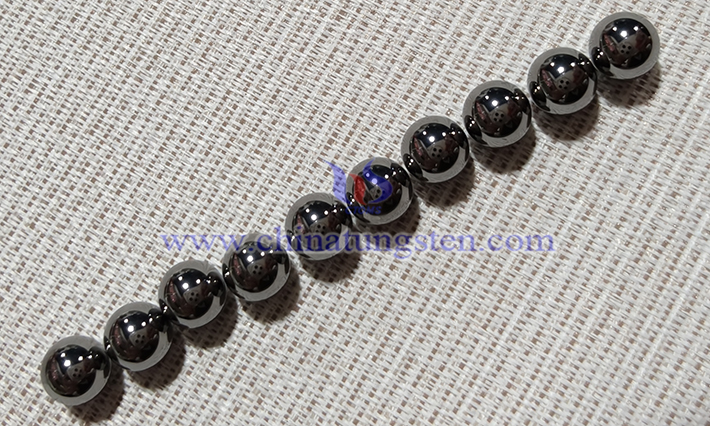
In the field of micro-flow measurement, the density advantage of tungsten beads is particularly prominent. Their mass is 2.3 times that of a steel ball of the same volume, allowing for a more precise response to changes in flow velocity under gravity. For example, in turbine flow meters, tungsten beads are used as counterweights for impeller bearings. Adjusting the position of the tungsten beads allows for fine-tuning of the impeller's moment of inertia, ensuring the instrument maintains a linear response even at low flow rates. Furthermore, the spherical structure of the tungsten beads reduces fluid resistance, and combined with surface polishing, minimizes flow field interference, meeting the stringent flow measurement requirements of industries such as pharmaceuticals and semiconductors.
III. Applications of Tungsten Beads in Flow Meters
Tungsten bead flow meters are widely used in various fields. In the petrochemical industry, their high-temperature resistance makes them the preferred choice for measuring high-temperature steam flow. In the new energy field, tungsten bead mass flow meters can accurately measure light gases such as hydrogen, contributing to the development of the hydrogen energy industry chain. With advancements in material modification technology, tungsten beads doped with elements such as cobalt and titanium have further improved their resistance to brittleness, making their application in extreme environments such as aerospace possible.