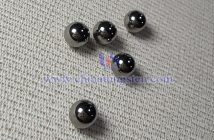
Tungsten balls, also known as cemented carbide balls, are a high-performance material that plays a crucial role in the field of precision bearings. Their main component is a composite of tungsten carbide and cobalt, possessing extremely high hardness and wear resistance. They are widely used in mechanical systems requiring high precision and durability, especially in aerospace, automotive manufacturing, and oil and gas industries.
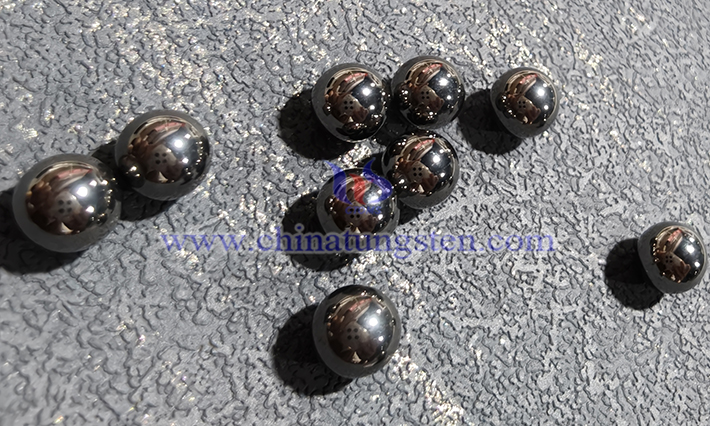
The unique properties of tungsten balls make them particularly suitable for precision bearing applications. First, their extremely high hardness, typically reaching Rockwell hardness (HRA) above 90, allows them to withstand extreme impacts and wear. This enables tungsten balls to maintain dimensional stability under high load conditions, preventing deformation or failure. Second, tungsten balls are corrosion-resistant, high-temperature resistant (up to 800°C and above), and moisture-resistant, allowing them to operate normally even in environments with poor lubrication. Furthermore, they have strong resistance to chemical corrosion, making them suitable for harsh industrial environments. These properties far surpass those of traditional steel balls, ensuring that bearings maintain high precision and reliability over long-term use.
Specific applications of tungsten balls in precision bearings primarily include ball bearings, angular contact ball bearings, and linear bearings. For example, in deep groove ball bearings, tungsten balls act as rolling elements, reducing friction and improving rotational efficiency, making them suitable for high-speed rotating equipment such as inertial navigation systems and linear bearings. In high-load bearings, tungsten balls withstand heavy loads without deformation, commonly used in oil drilling equipment and automotive transmissions to ensure smooth system operation. Furthermore, tungsten balls are used in ball screws to convert rotary motion into linear motion, improving the positioning accuracy of precision machine tools. In measuring instruments and inspection equipment, tungsten balls serve as calibration elements, providing micron-level precision, supporting semiconductor manufacturing and the assembly of aerospace components.
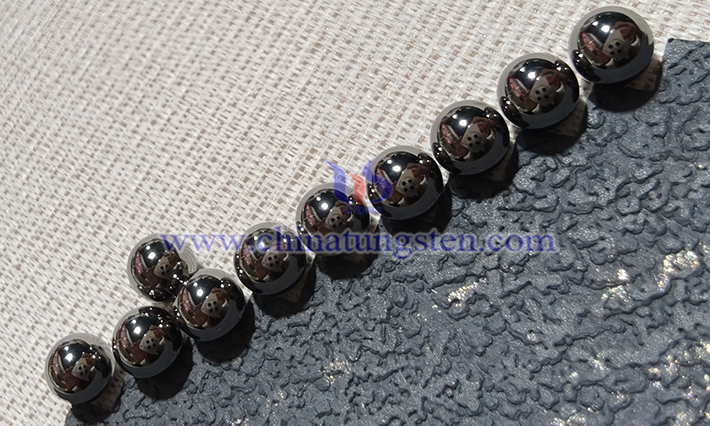
The advantages of tungsten balls in the bearing field are multifaceted. Compared to stainless steel balls, tungsten balls have several times higher wear resistance, extending bearing life by 2-5 times and reducing maintenance costs. Under extreme conditions, such as high-temperature or corrosive environments, tungsten balls maintain a low coefficient of friction, improving energy efficiency. For example, in aerospace bearings, tungsten balls are used in gyroscope raceways to ensure stable performance at high altitudes and extreme temperatures. In the automotive industry, tungsten balls are used in steering mechanisms and crankshaft balancing components to improve vehicle stability and fuel economy. In the oil and gas sector, they are used in high-pressure pump and valve bearings to resist wear and corrosion, making them suitable for deep-sea drilling. Furthermore, tungsten balls can achieve a surface finish of G10, meeting the requirements of precision instruments such as electronic heat sinks and metrological calibration.