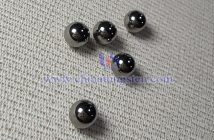
Tungsten balls are a key precision component in modern mechanical and some smart water meters. They are mainly used in the top support structure of the water meter, supporting the impeller shaft, reducing friction, and improving metering stability and durability.
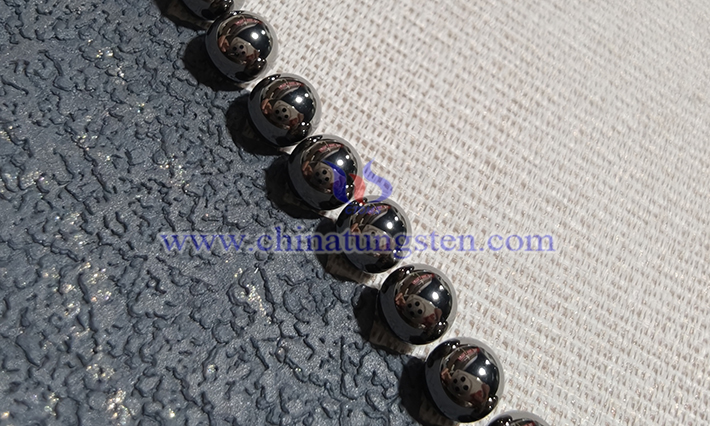
Traditional mechanical water meters (such as rotary wet or dry water meters) rely on water flow to drive the impeller to rotate. The lower end of the impeller shaft is conical (the tip), resting on the center of the tungsten ball's recess or plane. The tungsten ball is then fixed to the adjusting plate or base. Early models often used stainless steel or jewel bearings, but with the increasing complexity of water quality (containing chlorine, impurities, acids, and alkalis) and the increasing demands of long-term operation, tungsten balls have gradually become the mainstream choice.
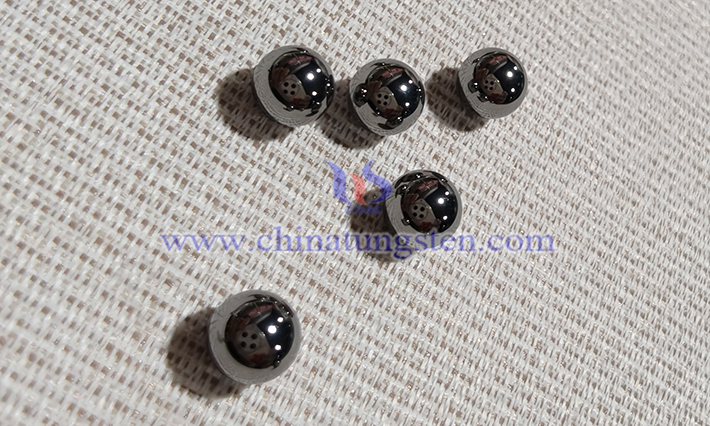
The main material of tungsten beads used in water meters is tungsten carbide (WC), with a hardness reaching HRA 89–92 or higher and a density of approximately 14.5–15 g/cm3. It possesses the following outstanding advantages:
Extremely high hardness and wear resistance: Its hardness far exceeds that of ordinary steel and stainless steel, and its wear resistance is dozens of times greater than that of steel beads. Even during long-term operation in tap water containing sand and rust, it produces almost no significant wear, avoiding metering error drift or idle running caused by increased bearing clearance.
Excellent corrosion resistance: Tungsten alloys have extremely strong resistance to chloride ions, acidic or alkaline substances, and will not rust or pit like ordinary metals, making it particularly suitable for environments with aging pipe networks and high chloride content in the water.
Stability due to high density: The high density allows the tungsten beads to maintain positional stability under water flow impact, reducing vibration and sway, helping to keep the impeller shaft vertical, and lowering the starting flow rate and metering lower limit.
Low coefficient of friction: The surface is precision ground, resulting in minimal friction when paired with the impeller shaft tip (usually made of stainless steel or sapphire). This reduces the water meter's own resistance, improves the accuracy of low-flow-rate metering, and is of great significance for tiered water pricing and leakage monitoring for residents.