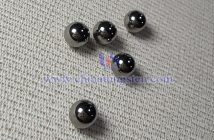
Tungsten balls used in bearings generally refer to tungsten carbide (TCC) balls. Tungsten balls are mainly used as rolling elements in bearings, and their advantages lie in their high hardness, high strength, wear resistance, high temperature resistance, corrosion resistance, and adaptability to extreme working conditions.
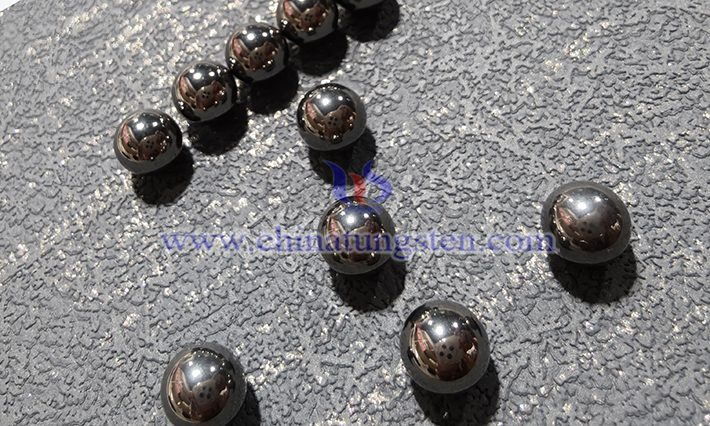
I. Characteristics of Tungsten Balls
High Hardness and Wear Resistance: Tungsten carbide has a hardness second only to diamond in nature. This characteristic effectively reduces friction and wear, thus significantly extending the service life of bearings.
High Temperature Resistance: Tungsten has a melting point as high as 3410℃, allowing tungsten balls to remain stable in high-temperature environments, preventing deformation or melting, making them suitable for high-speed rotation applications.
Corrosion Resistance: Tungsten balls resist acid and alkali corrosion as well as oxidation at room temperature, allowing them to maintain good performance even in relatively harsh working environments.
Bending Resistance: The high density and strength of tungsten balls enable them to withstand enormous loads and impacts, thus improving bearing stability.
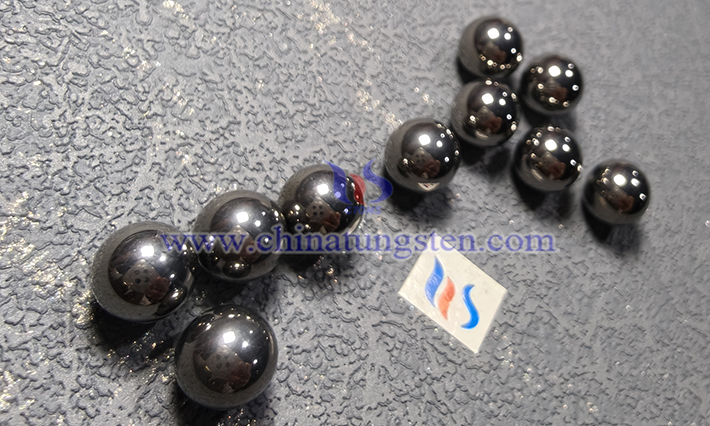
II. Applications of Tungsten Balls in Bearings
In practical bearing applications, tungsten balls often replace traditional steel balls and are widely used in precision equipment such as ball bearings and linear motion systems as key rolling elements. For example, in high-end machine tools, where bearing precision and friction coefficient requirements are extremely high, the application of tungsten balls can reduce thermal deformation and significantly improve machining accuracy. In the aerospace field, facing extreme temperature and load conditions, the high-temperature resistance and impact resistance of tungsten balls are particularly important. In industrial machinery, core components such as automotive engines and transmissions require tungsten ball bearings to withstand high-load operation. Furthermore, tungsten balls can also be used at the end of the rotor of passive magnetic bearings, working in conjunction with magnet assemblies to achieve axial alignment and effectively reduce thrust load.