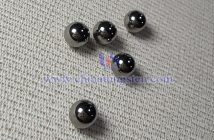
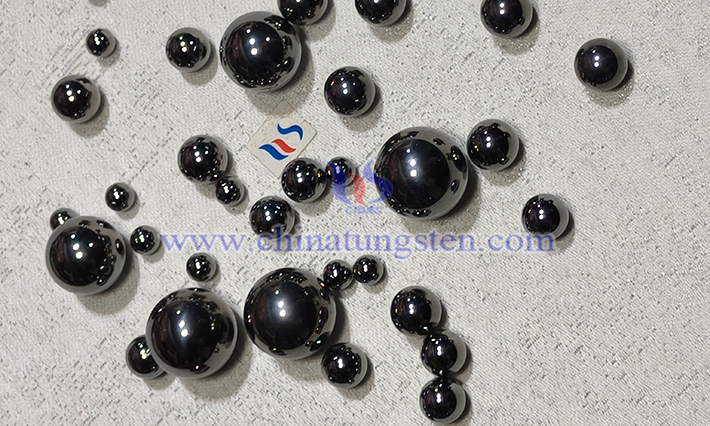
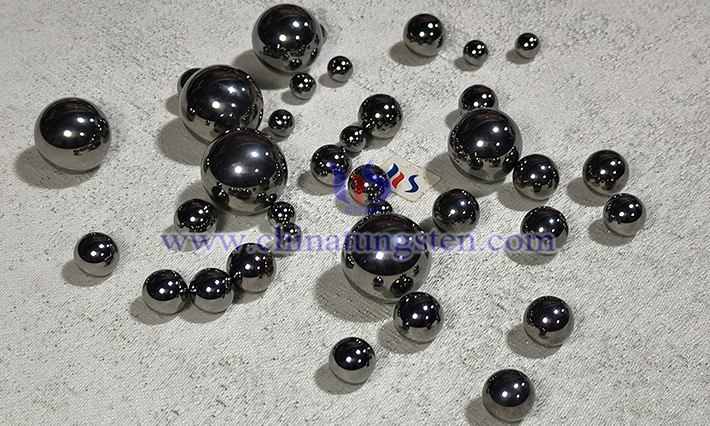
Tungsten beads, typically referring to high-density tungsten alloy beads, are commonly used in fishing weights, shooting marbles, medical device weights, and precision industrial components. Tungsten beads possess stable chemical properties and exhibit high stability in most environments from room temperature to moderate temperatures.
1. Room Temperature Stability: In dry air from room temperature to approximately 400°C, tungsten beads undergo almost no oxidation, maintaining a metallic luster over a long period without discoloration or significant deterioration. This makes them suitable for long-term exposure to the atmosphere, fresh water, seawater, soil, and natural environments such as sweat and rainwater, far superior to lead or ordinary steel. In applications such as fishing weights and medical counterweights, they can maintain stable appearance and performance for many years, virtually unaffected by atmospheric or environmental corrosion.
2. Corrosion Resistance: Tungsten beads exhibit good corrosion resistance to most inorganic acids. At room temperature, hydrochloric acid, sulfuric acid, or nitric acid alone have minimal corrosive effects on them, showing almost no dissolution or a very slow corrosion rate, remaining stable even after prolonged contact. However, they exhibit some reactivity when exposed to hydrofluoric acid, especially when mixed with other acids (such as nitric acid), which significantly accelerates the corrosion process. Heated aqua regia or concentrated nitric acid also cause noticeable corrosion. Therefore, prolonged use in strongly oxidizing mixed acid environments is not advisable, which is one of their main chemical weaknesses.
3. Alkali Resistance: In alkaline environments, tungsten beads are essentially stable to aqueous solutions of sodium hydroxide or potassium hydroxide at room temperature, showing no significant reaction. However, if placed under high-temperature molten alkali conditions (such as molten sodium hydroxide with the addition of an oxidizing agent such as potassium nitrate), they will react rapidly to form soluble tungstates, leading to rapid material loss.
4. High-Temperature Oxidation Resistance: Tungsten beads exhibit good oxidation resistance at lower temperatures. At 500–600℃, the surface begins to slowly oxidize, forming a thin layer of tungsten trioxide (WO?). However, above this temperature range, when exposed to higher-temperature oxidizing atmospheres, the oxidation rate accelerates dramatically, and the tungsten trioxide further volatilizes, resulting in rapid material loss. Therefore, tungsten beads are not suitable for prolonged exposure to oxygen-containing high-temperature environments above 500℃, and such usage conditions should be avoided.
5. Reaction with Other Substances: At high temperatures, tungsten beads can react with carbon and carbon-containing gases to form tungsten carbide, and react with halogens such as fluorine and chlorine at certain temperatures, or form corresponding compounds with elements such as sulfur and nitrogen at extremely high temperatures. However, these reactions are rare in the conventional applications of tungsten beads.